
Dark spots and musty rooms after a wet spell
Mold After Water Damage in Bremen, GA
Mold needs moisture, and a room that stayed wet gives it plenty. This page is for Bremen, Waco, Tallapoosa and Temple households who smell mildew or see dark spots after a leak. Call (678) 839-7986 and say when the water arrived and where you see it.
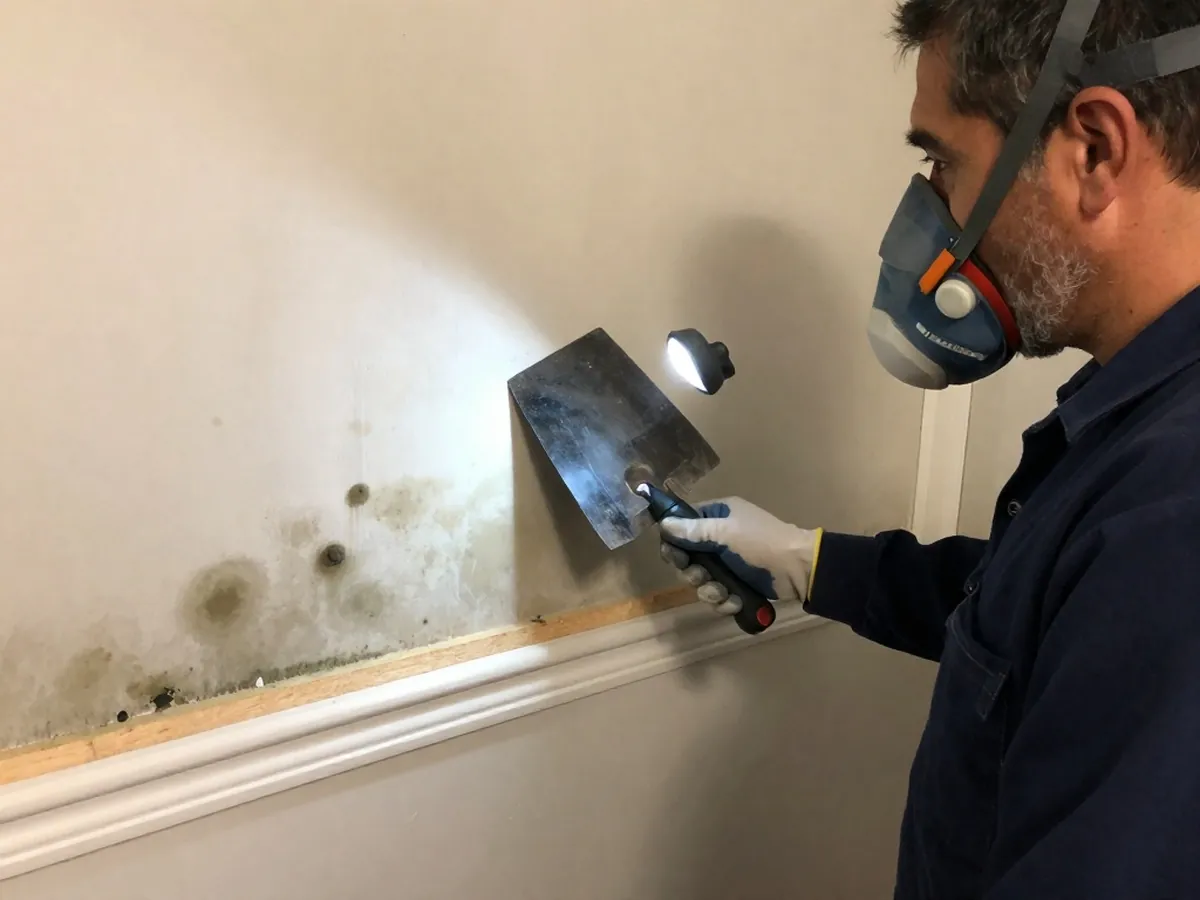
What it looks like
- Dark, fuzzy or speckled patches on drywall, a closet wall or a ceiling corner
- A mildew smell that creeps back once the windows are shut again
- Paint or wallpaper that bubbles above a spot that was wet before
- Spots on the underside of carpet or on the back of a baseboard
- Window frames or a closet floor that stay damp for days
Step out and get help if
- Someone is struggling to breathe, wheezing badly or has chest pain after time in the room: call 911.
- Wet outlets, switches or a panel behind the damp wall: stay away from the circuit, and call 911 for sparks, smoke or a burning smell.
- A gas appliance in the damp room, or any gas odor: step out and call 911 or whoever supplies your gas.
- The wetness came from sewage: leave the cleanup alone and phone your town's water and sewer office.
What mold needs, and what a leak supplies
UGA Extension lists four things mold needs: a food source, moisture, a suitable temperature and oxygen. A house supplies three of them all the time. Wood, paper and the paper face of drywall are food, the temperature is comfortable and the air is air. Moisture is the one item that comes and goes, which is why a leak starts the clock.
Take the moisture away and the rest matters much less. That is the logic behind drying a wet room within 24 to 48 hours, as EPA advises.
What to know in these four towns
- Haralson County's climate page puts average relative humidity near 75 percent, lowest in January and highest in September. EPA's brief guide sets 60 percent as the ceiling for indoor humidity and puts the ideal between 30 and 50 percent.
- UGA's checklist asks owners to look for moisture in the crawl space, the attic, the window frames and the water heater pan. It adds the lines behind the washer and dishwasher. An inexpensive humidity meter reads the air.
- A closed-up house keeps moisture in. CDC says to assume mold is present in a home that was flooded and shut for several days. It suggests airing it out for at least 30 minutes before staying long.
When a musty room needs a visit
The smell returns a day after you aired the room out. A stain is spreading, or you find it in a ceiling corner and again on the back of a closet wall. The room was wet for more than a day or two and was never properly dried.
Call (678) 839-7986 with the date the water arrived, what it soaked and where the dark spots sit. Photos help.
Questions, answered
Where does mold land on a 1 to 10 grade?
A few spots on bathroom tile that wipe off is a 2. A patch on wallboard that your hand can cover is a 5. EPA sets the do-it-yourself limit near 10 square feet. Past that, or where sewage was the cause, EPA points to its remediation guide and to professionals with experience. Breathing trouble is a 10 and goes to 911. For a 4 or 5, call (678) 839-7986.
How soon does mold start?
EPA says that in most cases mold will not grow if wet areas are dried within 24 to 48 hours. UGA says mold can begin within 24 hours of a flood. It can form again in 2 to 3 days on a cleaned surface that stays damp. Neither page names a date after which it is certain, so both are reasons to get drying started.
Is cleaning the mold enough?
EPA says that if you clean the mold but leave the water problem alone, the mold will most likely return. The leak, the humidity or the soaked insulation needs attention too. Mold also damages what it grows on, so a stain on drywall can hide softer material behind it.
What goes in the trash?
EPA says porous, absorbent items, ceiling tiles and carpet among them, may need to be discarded once mold takes hold. UGA adds that moldy padding always goes, and that wet insulation inside a wall is replaced even when the wallboard looks dry.
Can I clean it myself?
UGA lists four conditions for do-it-yourself work. The growth is not extensive, and sewage or contaminated water was not the cause. The heating and cooling system is not involved, and nobody in the house has respiratory concerns. If any of those fails, UGA points to a water damage or mold restoration professional.
Does this reach Waco, Tallapoosa and Temple?
Yes, all four towns. The humidity figures above come from Haralson County, and each town page adds its own housing numbers. See the Bremen notes and the Waco notes; then call (678) 839-7986 with the street and the town.
What decides how big a mold job gets
Prices are not listed here. EPA's cleanup page sets its limit near 10 square feet, and bigger areas or heavy water damage send you to its remediation guide. Size is the first factor.
The second is the material: carpet and ceiling tile tend to be discarded, but hard surfaces can usually be cleaned. The third is the cause. If the leak is still running, or the humidity stays high, any cleanup is temporary.
Mold work and who may do it
Nothing in the Georgia pages opened for this site says whether mold work needs a state credential. A rebuild after the mold comes out can also bring up a permit question. The paperwork page gathers what the sources do and do not say.